Table of contents
Quick answer
Regular commercial pest control improves health and hygiene, prevents costly damage from neglect, helps pass audits and inspections, and keeps occupants, customers or residents satisfied. It is a small, predictable cost compared to the complaints, sick days, repairs or lost trust that follow when it's skipped.
Key takeaways
- Streak-free glass and clean surfaces
- Grease-free ducts with photo proof
- Safe completion with no incidents
- Space ready for handover on time
- Costs less, in total, than the problems it prevents
- Makes audits and inspections straightforward instead of stressful
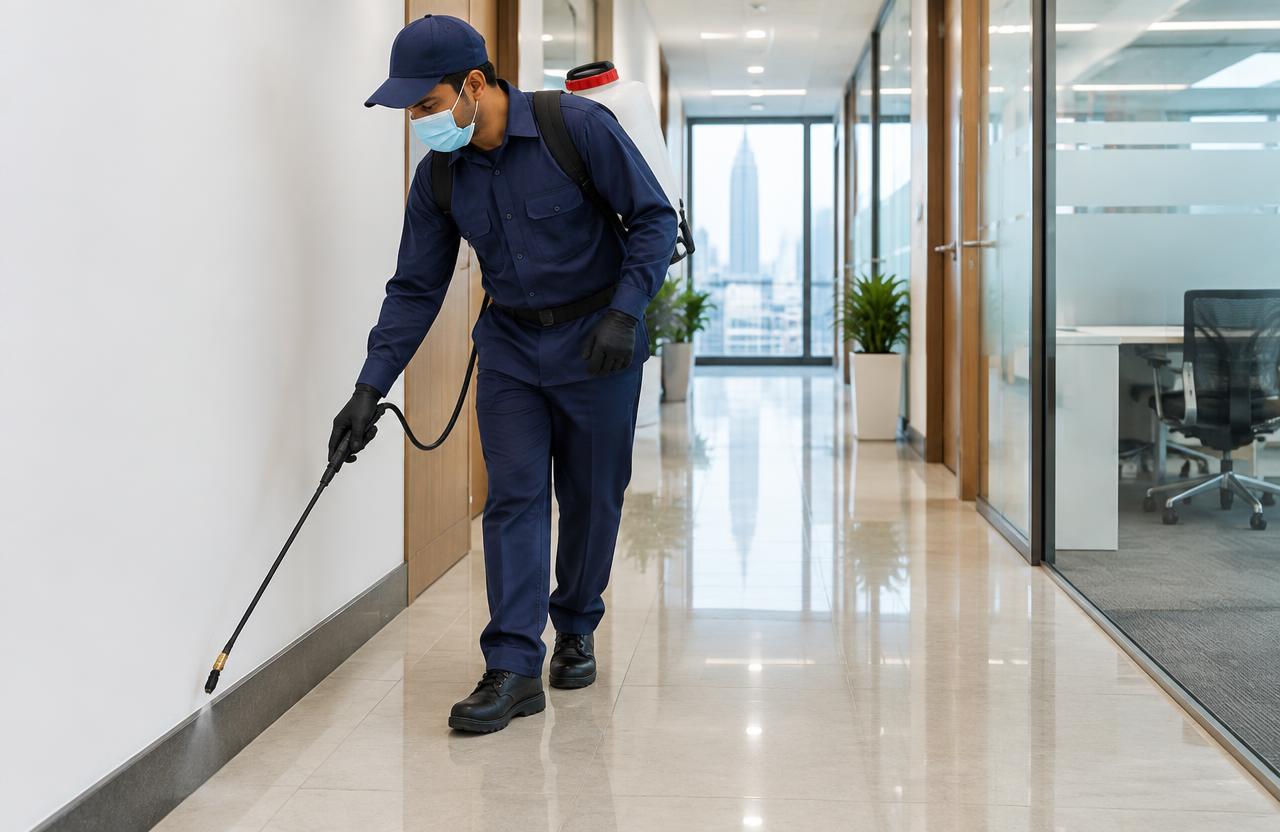
Health and hygiene benefits
Jobs like facade cleaning, duct cleaning, sanitization and post-construction cleaning need special equipment and safety training. Doing them wrong can cause falls, fire risk, damaged surfaces or incomplete disinfection.
Regular commercial pest control is the direct, practical response to that risk — not an optional extra.
What you can actually measure
After regular service, our clients typically track:
| What to track | Why it matters |
|---|---|
| Streak-free glass and clean surfaces | visible from the street and from inside |
| Grease-free ducts with photo proof | the detail fire inspectors check first |
| Safe completion with no incidents | the baseline for any height or technical work |
| Space ready for handover on time | critical for builders and new tenants or openings |
Financial benefits
The cost of commercial pest control is fixed and predictable: ₹1–₹3 per sq. ft. (min. visit charge applies). The cost of skipping it is not — it shows up later as complaints, emergency call-outs, damaged surfaces or equipment, or a failed audit, usually at a worse time and a higher price than a scheduled visit would have cost.
Compliance and reputation benefits
Work at height should follow safety norms with harnesses and anchor points, kitchen exhausts are checked during fire-safety inspections, and disinfection for hospitals should use approved chemicals with documented dilution.
A documented history of commercial pest control is exactly what turns an inspection, audit or resident query from a stressful event into a quick, factual conversation.
Who benefits most
Commercial Pest Control is most valuable for builders, property managers, hotel engineers, restaurant owners, hospital administrators and retail chains. High-rises in business districts of Mumbai, Thane and Navi Mumbai need BMU or rope-access facade cleaning with building management's permission, while older low-rise buildings can often be done with ladders and boom lifts. Restaurants across these areas face routine fire-safety expectations for grease-free exhausts, and new residential and commercial handovers in fast-developing belts like Panvel generate steady post-construction cleaning demand.
Why some sites delay anyway
A few beliefs tend to be behind the delay, and neither holds up well in practice:
| Myth | Reality |
|---|---|
| Any cleaning company can do facade cleaning if they have a ladder. | Work above a certain height needs rope-access or BMU training, harness use and anchor-point checks. A ladder-only approach is unsafe and usually against building access rules. |
| Wiping the hood means the duct is clean. | Grease travels deep into duct runs and exhaust fans. A hood-only wipe leaves the exact fuel source fire inspectors look for inside the ductwork. |
Good to know
Delaying rarely saves money — it usually just moves the cost later and makes it larger.
Get started
Book a free site survey anywhere in Mumbai, Navi Mumbai, Thane and Panvel. We'll assess the site, explain what we find, and share a fixed quote for commercial pest control with no obligation to proceed.
Need commercial pest control?
Free site survey and fixed written quote. Rates from ₹1–₹3 per sq. ft. (min. visit charge applies).
Available in Mumbai, Navi Mumbai, Thane, Panvel.
Frequently asked questions
Written and maintained by the Commercial Cleaning Mumbai team, based on hands-on commercial pest control jobs across Mumbai, Navi Mumbai, Thane and Panvel. We review this page whenever our process, pricing or guidance changes, and the "updated" date above always reflects the last review.