Table of contents
Quick answer
In Maharashtra, municipal corporations (BMC, NMMC, TMC), FSSAI-style hygiene expectations, NABH-style infection-control norms and society bye-laws all point toward regular, documented cleaning rather than a specific fixed schedule written into a single rule. For society common area cleaning, the practical response is to keep dated reports, photos and invoices so you can show what was done and when, whenever anyone asks.
Key takeaways
- Documentation matters as much as the cleaning itself
- Food businesses and healthcare sites face the closest scrutiny
- Society committees are accountable to members at the AGM
- Keep reports for at least two years as a general practice
- This is general guidance, not legal advice — check current requirements with your municipal body or industry regulator
- A completion report is the single most useful document to have on hand
Which expectations generally apply
The Maharashtra co-operative society bye-laws make the managing committee responsible for maintaining common areas and water supply. Keeping vendor contracts, schedules and tank cleaning reports helps during audits and AGMs.
Good to know
This is general guidance on common practice, not legal advice. Confirm current requirements for your specific site with your municipal body, industry regulator or society's legal advisor.
Records to keep and why
These are the documents that actually get asked for during an inspection, audit or AGM:
| Record to keep | Why it matters |
|---|---|
| Vendor contract with clear scope, schedule and penalty clauses | the reference point if service slips |
| Monthly attendance and service log | what the committee presents at the AGM |
| Tank cleaning certificates/reports | the most commonly requested record at audits |
| Pest control, facade or deep-cleaning completion reports | evidence the society is maintaining common areas |
| Annual cost summary | supports the committee's budget review and the next AGM |
Who typically asks for these records
Depending on your site, expect these records to be requested by:
- Society secretaries, as the people directly accountable for the site
- Municipal or fire-safety inspectors during routine checks
- Internal or external auditors reviewing hygiene or safety compliance
- Society members at an AGM, if the topic is raised
- Insurers, in the event of a claim
How often to refresh the documentation
Because society common area cleaning itself is needed daily housekeeping for common areas, deep cleaning every 1–3 months and tank cleaning every 6 months, the records should be refreshed on the same cycle — a report that's a year old is of limited use if something is questioned today.
Sector-specific expectations
Maharashtra co-operative society bye-laws place responsibility for maintaining common areas and water supply on the managing committee, which is why dated vendor contracts and service logs matter at every AGM.
How we help
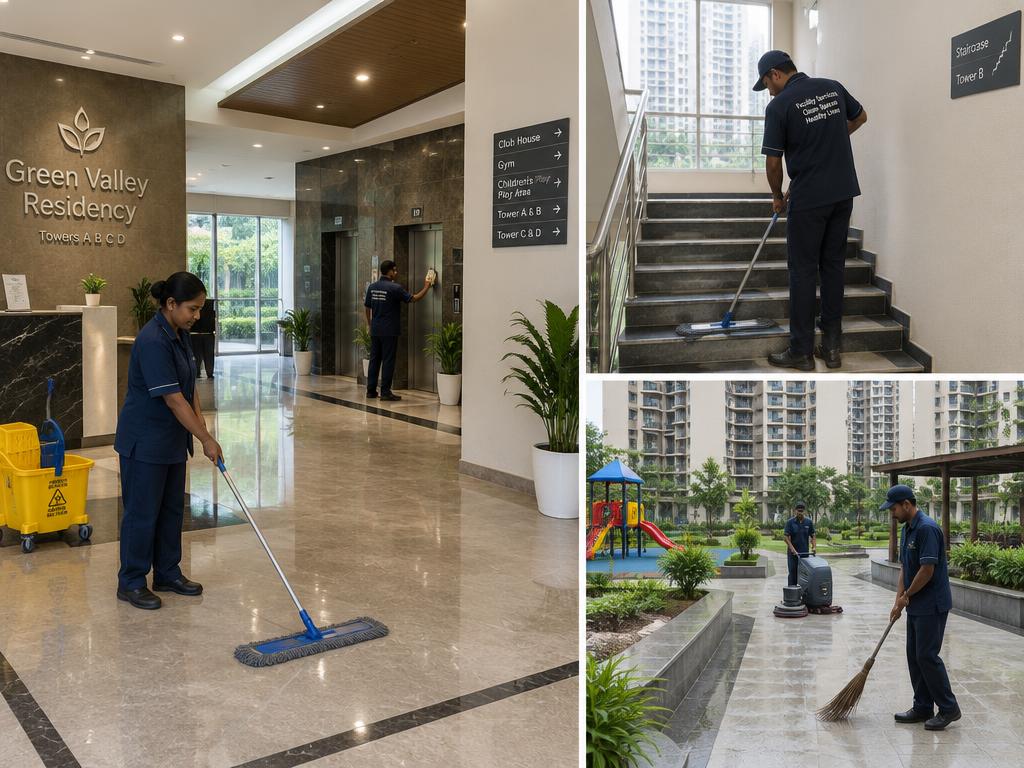
Every society common area cleaning job from Commercial Cleaning Mumbai includes a dated completion report with photos that you can show to inspectors, auditors or members — not a certificate claiming a specific legal standard, but a clear record of exactly what was done.
Need society common area cleaning?
Free site survey and fixed written quote. Rates from ₹15,000+ per visit.
Available in Mumbai, Navi Mumbai, Thane, Panvel.
Frequently asked questions
Written and maintained by the Commercial Cleaning Mumbai team, based on hands-on society common area cleaning jobs across Mumbai, Navi Mumbai, Thane and Panvel. We review this page whenever our process, pricing or guidance changes, and the "updated" date above always reflects the last review.