Table of contents
Quick answer
To clean a Sintex tank: shut the inlet, drain the water, scoop out sludge, scrub the walls with a soft brush and mild detergent, rinse twice, disinfect with a diluted chlorine solution, leave it to work, rinse again until no smell remains, and refill. Never use acid, wire brushes or a pressure jet held too close, since all three damage the plastic surface.
Key takeaways
- Use soft brushes only — plastic scratches trap bacteria and algae
- Avoid acid and harsh bleach on PVC/HDPE
- Clean every 3–6 months, and always around the monsoon
- Disinfect, then rinse thoroughly before refilling
- Never climb into a small tank to clean it
- Check the lid seals properly once you're done
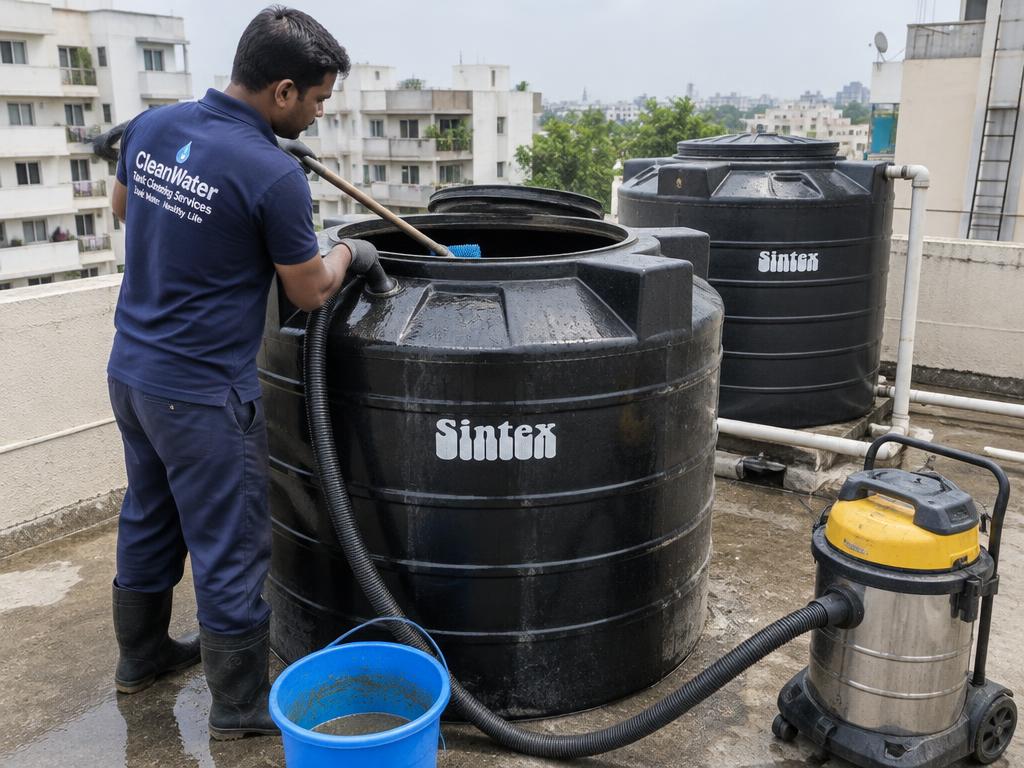
Why Sintex tanks need gentler handling
Plastic tanks are lighter, cheaper and don't rust like metal or corrode like concrete, but their surface scratches far more easily. A scratched inner wall gives algae and bacteria somewhere to grip, so a tank cleaned the wrong way gets dirty again faster than one cleaned correctly — the method matters as much as the frequency.
What you need
Basic tools for a plastic tank, nothing industrial:
| Tool / material | Purpose |
|---|---|
| Soft nylon brush or sponge on a long handle | Scrubs without scratching the plastic |
| Bucket and mug, or a small submersible pump | Removes drained water and loosened sludge |
| Mild liquid detergent | Lifts grime without damaging the plastic surface |
| Bleaching powder or a chlorine-based solution, diluted | Disinfects after scrubbing |
| Gloves, mask and non-slip footwear | Basic protection while working around a wet, enclosed space |
Step-by-step method
Follow these steps in order — skipping or reordering them is how tanks end up only partly clean:
- Close the inlet valve and switch off the pump
- Drain the water through the outlet, or with a small pump
- Remove the sludge at the bottom with a mug and cloth
- Scrub the walls, base and lid with a soft brush and mild detergent
- Rinse thoroughly and drain again
- Fill a little water with diluted chlorine solution, wipe all surfaces, and leave it for about 30 minutes
- Drain, then rinse repeatedly until no chlorine smell remains
- Check the lid and any fittings are seated properly, then refill
A general guide to disinfectant strength
Exact dosing depends on the product label and tank size, but as a general approach:
| Tank size | General approach |
|---|---|
| Small loft tank (under 500 L) | A light, well-diluted solution is usually enough — follow the product label |
| Mid-size tank (500–2,000 L) | Slightly more solution, still well within the label's recommended dilution |
| Large tank (2,000 L+) | Treat it closer to professional work — consider calling a trained crew with measuring equipment |
Good to know
Always follow the product label's dilution instructions rather than guessing — too strong a solution leaves residue and odour, and can irritate skin.
Mistakes that damage Sintex tanks
Wire brushes, undiluted acid cleaners, very hot water and climbing inside a small tank can all crack, scratch or deform the plastic. Scratches hold algae and bacteria, which is exactly what you're trying to remove in the first place.
Good to know
Never enter a tank to clean it from the inside — even a small one. Clean from the manhole opening with a long-handled brush instead.
When to call a professional
For housing societies, offices, hotels, hospitals and factories in Mumbai, Navi Mumbai, Thane and Panvel, Commercial Cleaning Mumbai does mechanized cleaning with sludge pumps, high-pressure jets, disinfection and a photo report. Call +91 96731 98867 for a free site survey.
Need plastic & sintex tank cleaning?
Free site survey and fixed written quote. Rates from ₹600–₹1,500 per tank.
Available in Mumbai, Navi Mumbai, Thane, Panvel.
Frequently asked questions
Written and maintained by the Commercial Cleaning Mumbai team, based on hands-on plastic & sintex tank cleaning jobs across Mumbai, Navi Mumbai, Thane and Panvel. We review this page whenever our process, pricing or guidance changes, and the "updated" date above always reflects the last review.