Table of contents
Quick answer
To clean a small water tank at home: store some water for immediate use, close the inlet, drain the tank, remove sludge by hand, scrub the walls with a brush and mild detergent, rinse, disinfect with a diluted chlorine solution for about 30 minutes, rinse again until the smell is gone, and refill. Large overhead, underground or building tanks should be left to trained crews with pumps, gas detection and safety equipment — this business serves commercial properties and housing societies for exactly that reason, not individual homes.
Key takeaways
- Small loft or terrace tanks can usually be cleaned by hand
- Always disinfect, then rinse thoroughly before refilling
- Never enter an underground tank or sump without gas checks
- Building, society and underground tanks need a professional crew, not a DIY attempt
- Store a few hours of drinking water before you start
- Check the water runs clear and odour-free before using it normally
Is this a job you should do yourself?
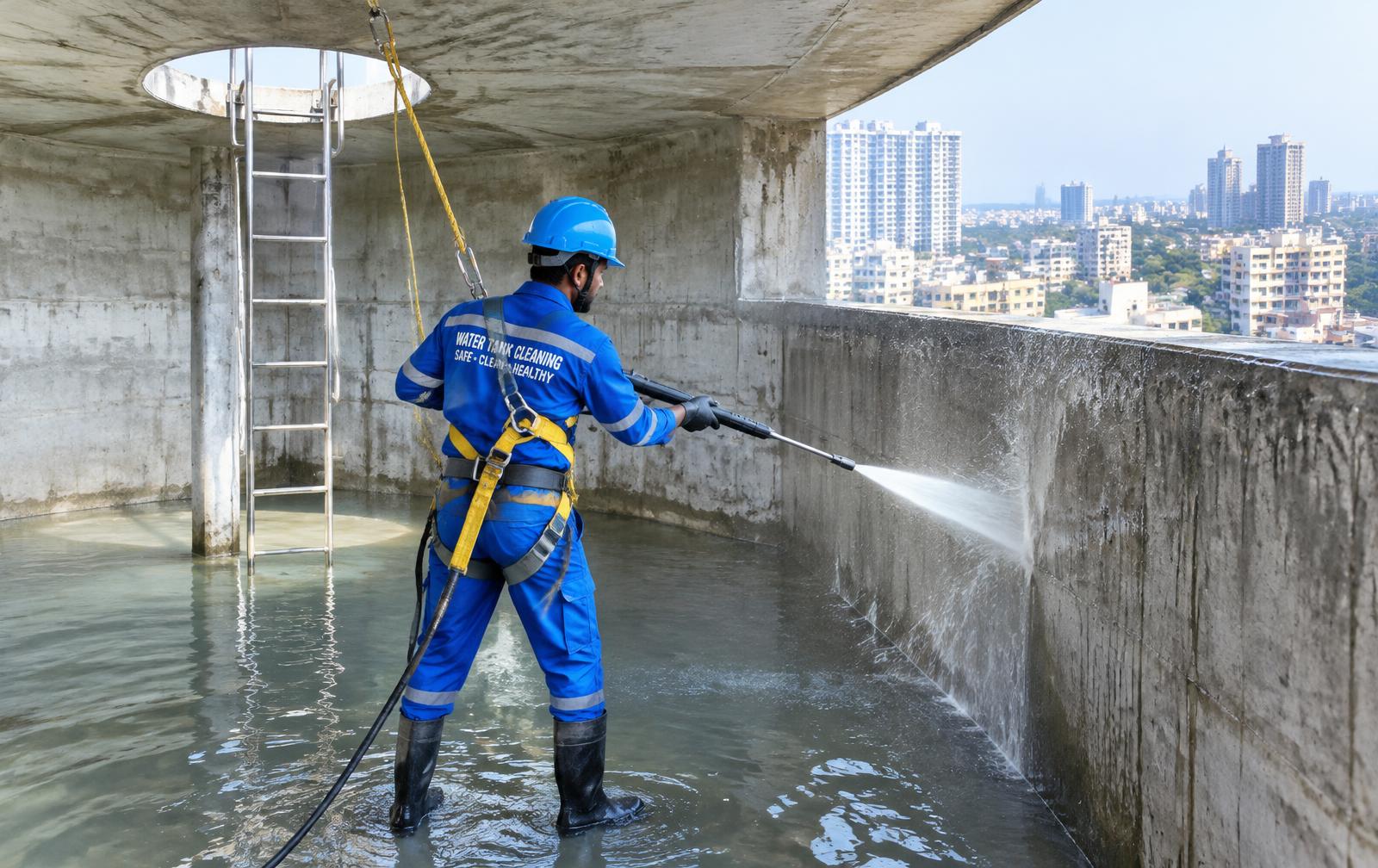
A small loft or terrace tank that one person can safely reach from outside, without climbing in, is reasonable to clean yourself with basic care. Anything larger, anything underground, or anything that needs a ladder onto an unprotected terrace edge is a different category of job — treat the guidance below as a limit, not a starting point for bigger tanks.
Tools for a small DIY tank clean
Nothing specialised is needed for a small tank:
- A bucket, mug or small submersible pump
- A long-handled soft brush
- Mild liquid detergent
- A diluted chlorine-based disinfectant (follow the product label)
- Gloves and a mask
Step-by-step for a small tank
Work through these in order:
- Store drinking and cooking water for a few hours before you start
- Close the inlet valve and drain the tank fully
- Scoop out the sludge at the bottom
- Scrub the walls and base with a brush and mild detergent
- Rinse thoroughly and drain again
- Add a little water with a diluted chlorine solution, wipe surfaces, and wait about 30 minutes
- Rinse again until no chlorine smell remains, then refill
Disinfecting safely
A diluted chlorine solution, or a very light dose of potassium permanganate, is enough to disinfect a small home tank. Follow the product label for dilution rather than guessing, and always rinse until the smell is completely gone before the tank is used again — residual disinfectant in drinking water is as much a problem as the dirt you started with.
DIY vs calling a professional
A simple way to decide which side of the line your tank falls on:
| Scenario | Reasonable as DIY? | Why |
|---|---|---|
| Small loft/terrace tank, reachable from outside | Yes, with basic care | No confined-space or major height risk |
| Large overhead tank on a terrace needing a ladder | No | Fall risk and larger sludge volumes need proper equipment |
| Underground tank or sump | No | Risk of gas build-up and low oxygen — needs gas-testing equipment |
| Building, office or society tank of any size | No | Scale, access and documentation needs are beyond a DIY clean |
When home cleaning is not safe
Underground tanks and sumps can hold toxic gases and low oxygen levels that aren't obvious from outside. Overhead tanks on high terraces need a harness, not just caution. Large society or office tanks need pumps to shift the volume of sludge involved. In all of these cases, call a professional crew rather than attempting it yourself.
Good to know
Never enter an underground tank or sump without proper gas-testing and ventilation — this is the single most dangerous mistake people make with tank cleaning.
After refilling
Let the water run for a few minutes at the nearest tap before using it normally, check that it's clear and odourless, and keep an eye out over the next few days for any return of smell or discolouration, which would suggest the clean wasn't thorough enough.
When to call a professional
For housing societies, offices, hotels, hospitals and factories in Mumbai, Navi Mumbai, Thane and Panvel, Commercial Cleaning Mumbai does mechanized cleaning with sludge pumps, high-pressure jets, disinfection and a photo report. Call +91 96731 98867 for a free site survey.
Need water tank cleaning?
Free site survey and fixed written quote. Rates from ₹1.5–₹3 per litre capacity.
Available in Mumbai, Navi Mumbai, Thane, Panvel.
Frequently asked questions
Written and maintained by the Commercial Cleaning Mumbai team, based on hands-on water tank cleaning jobs across Mumbai, Navi Mumbai, Thane and Panvel. We review this page whenever our process, pricing or guidance changes, and the "updated" date above always reflects the last review.