Table of contents
Quick answer
You can reduce sediment in a tank without fully emptying it, using an underwater vacuum, or disinfect the stored water with a measured chlorine dose. Neither of these removes the biofilm and algae clinging to the tank walls, or heavy compacted sludge at the base. For a genuinely clean tank, it still needs to be drained, scrubbed, disinfected and rinsed on the usual schedule.
Key takeaways
- Underwater vacuuming removes loose bottom sediment only
- Chlorine dosing disinfects the water, not the tank walls
- Wall biofilm and algae need physical scrubbing to remove
- Twin-chamber tanks can be cleaned one side at a time to shorten the shutdown
- A full drain-and-scrub clean is still needed every 6 months
- Partial methods are a stopgap, not a substitute for the full process
Why people ask this
For a building or society with no spare water storage, a full shutdown for tank cleaning is disruptive, so it's a fair question whether there's a way to get most of the benefit without draining the tank completely. There partly is — but only partly.
Methods that work, partially
Options when you genuinely can't shut the water off completely:
- Underwater vacuum for loose sediment at the base
- Measured chlorine dosing to disinfect the stored water
- Cleaning one compartment at a time in twin-chamber tanks, keeping supply running from the other
What each method actually achieves
A clearer picture of what you're really getting:
| Method | What it solves | What it misses |
|---|---|---|
| Underwater vacuum | Loose sediment and sludge at the base | Biofilm and algae stuck to the walls and ceiling |
| Chlorine dosing | Bacteria in the stored water | Dirt, sludge and biofilm themselves; also needs correct, measured dosing |
| Compartment-by-compartment cleaning | Shortens the full shutdown | Still requires draining and scrubbing each side eventually |
What they miss, and why it matters
Biofilm on the walls, algae growing under the lid, rust from metal fittings and compacted sludge at the base all stay behind with partial methods. These are exactly what keep bringing bacteria, smell and discolouration back within weeks, even if the water tested clean right after a partial treatment.
A practical middle path
If a full shutdown is genuinely difficult, cleaning compartment by compartment, or scheduling the full clean for a low-usage night window, keeps the water cut to a few hours rather than a full day, while still getting a proper drain-and-scrub clean done.
Bottom line
Partial methods are a reasonable stopgap between scheduled cleans, not a replacement for one. The tank still needs a full drain, scrub, disinfection and rinse on the usual 6-month (or more frequent) schedule.
Good to know
Don't let a convenient partial method push back the scheduled full clean indefinitely — biofilm and sludge only get harder to remove the longer they're left.
When to call a professional
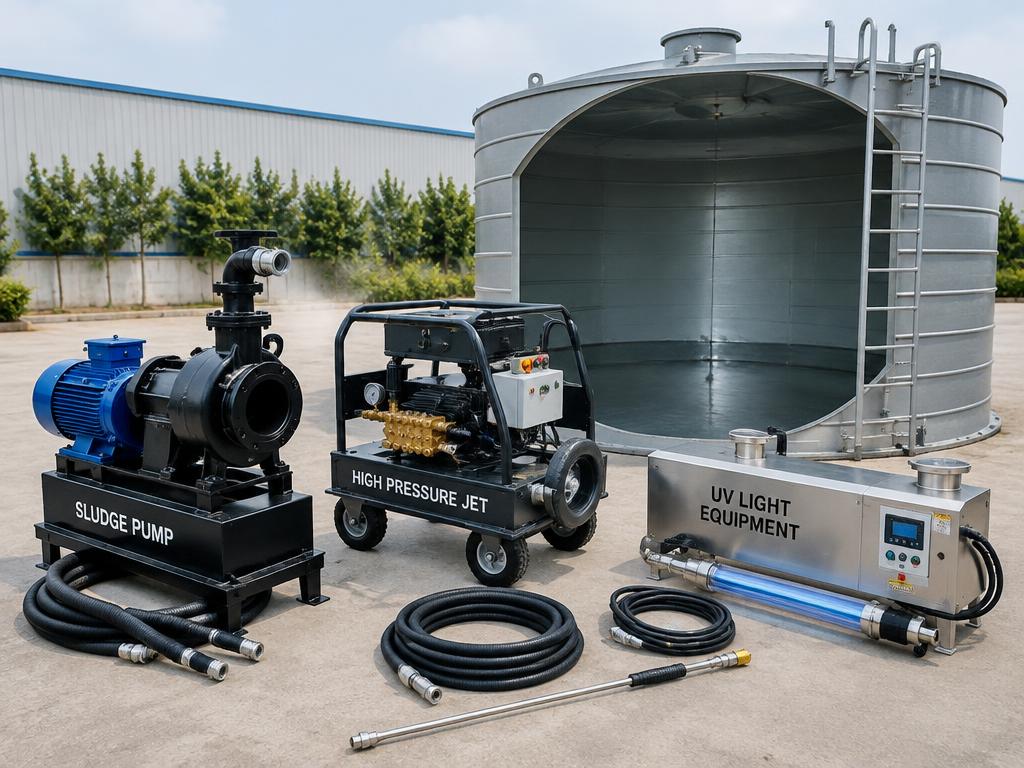
For housing societies, offices, hotels, hospitals and factories in Mumbai, Navi Mumbai, Thane and Panvel, Commercial Cleaning Mumbai does mechanized cleaning with sludge pumps, high-pressure jets, disinfection and a photo report. Call +91 96731 98867 for a free site survey.
Need water tank cleaning?
Free site survey and fixed written quote. Rates from ₹1.5–₹3 per litre capacity.
Available in Mumbai, Navi Mumbai, Thane, Panvel.
Frequently asked questions
Written and maintained by the Commercial Cleaning Mumbai team, based on hands-on water tank cleaning jobs across Mumbai, Navi Mumbai, Thane and Panvel. We review this page whenever our process, pricing or guidance changes, and the "updated" date above always reflects the last review.