Table of contents
Quick answer
Potassium permanganate is used in tank cleaning because it's a strong oxidising agent that kills bacteria, removes dissolved iron and bad odours, and helps control algae. It turns water pink, so the tank must be thoroughly rinsed after treatment and before the water is used. For routine disinfection of drinking water tanks, chlorine is more commonly used because it's cheaper, doesn't stain, and leaves a protective residual.
Key takeaways
- Kills bacteria and helps control algae through oxidation
- Removes dissolved iron and musty odours effectively
- Leaves a pink colour, so a full rinse is essential afterwards
- Use only measured, well-diluted amounts — never guess the dose
- Chlorine is the more common choice for routine drinking-water disinfection
- A professional will choose the disinfectant based on the specific water problem, not habit
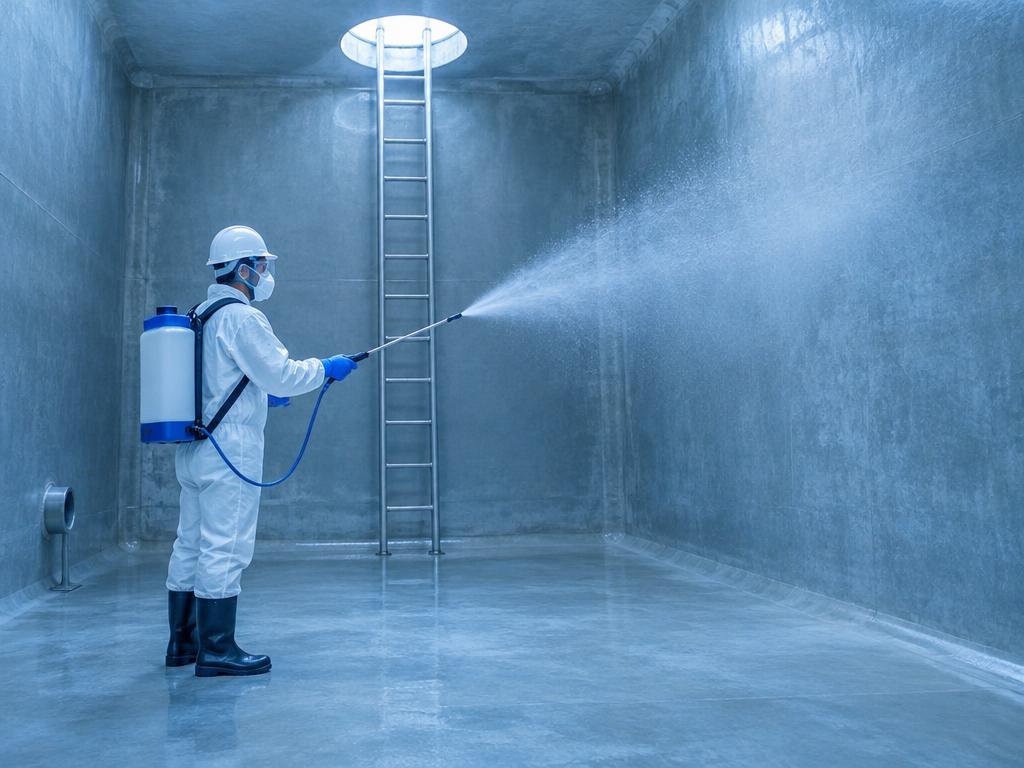
What potassium permanganate actually does
Potassium permanganate releases oxygen as it reacts, which breaks down bacteria, organic matter and dissolved iron in water. That's why tanks or borewells with a rust-like smell, iron staining or algae problems are sometimes treated with it specifically, rather than as a routine first choice.
Permanganate vs chlorine
The two are suited to different problems, not interchangeable for every situation:
| Factor | Potassium permanganate | Chlorine |
|---|---|---|
| Best suited for | Iron, odour and algae problems | Routine bacterial disinfection |
| Cost | Generally pricier for the same disinfection task | Cheaper for routine use |
| Residual protection | None — it's used up in the reaction | Leaves a small protective residual in the water |
| Staining | Can stain surfaces and skin if used too strong | Doesn't stain at correct dilution |
When it's the right choice
If a tank or borewell specifically shows rust-coloured staining, a metallic smell, or persistent algae that routine chlorination hasn't resolved, potassium permanganate is a reasonable targeted treatment. For ordinary routine disinfection of a drinking-water tank with no specific iron or odour problem, chlorine is usually the simpler and cheaper option.
Safety precautions
Potassium permanganate should always be used in small, measured, well-diluted amounts. Stronger solutions irritate skin and eyes, stain surfaces and clothing, and still need a thorough rinse before the tank returns to use.
Good to know
Never handle potassium permanganate crystals with bare hands or add it to a tank without measuring the dose — undiluted contact can burn skin.
How professionals decide
A trained crew chooses between chlorine, potassium permanganate or another approved disinfectant based on what a water test or visual inspection actually shows — iron staining and odour point one way, routine bacterial risk points the other — rather than defaulting to the same chemical on every job.
When to call a professional
For housing societies, offices, hotels, hospitals and factories in Mumbai, Navi Mumbai, Thane and Panvel, Commercial Cleaning Mumbai does mechanized cleaning with sludge pumps, high-pressure jets, disinfection and a photo report. Call +91 96731 98867 for a free site survey.
Need water tank disinfection?
Free site survey and fixed written quote. Rates from ₹0.8–₹1.5 per litre capacity.
Available in Mumbai, Navi Mumbai, Thane, Panvel.
Frequently asked questions
Written and maintained by the Commercial Cleaning Mumbai team, based on hands-on water tank disinfection jobs across Mumbai, Navi Mumbai, Thane and Panvel. We review this page whenever our process, pricing or guidance changes, and the "updated" date above always reflects the last review.