Table of contents
- 1.The full process at a glance
- 2.Step 1: Police-verified staff
- 3.Step 2: Uniform & ID cards
- 4.Step 3: Replacement guarantee
- 5.Step 4: Supervisor visits
- 6.Step 5: Consumables option
- 7.Step 6: Statutory compliance (PF/ESIC)
- 8.Crew size and duration
- 9.Quality checks during the process
- 10.Handover and reporting
- 11.What goes wrong when steps are skipped
- 12.Get a free quote
- 13.Frequently asked questions
Quick answer
Professional housekeeping manpower runs through a survey, then 1) police-verified staff, 2) uniform & id cards, 3) replacement guarantee, 4) supervisor visits, 5) consumables option, 6) statutory compliance (pf/esic), and ends with a supervisor walk-through and a completion report. Each step is done in order and photographed before the crew moves to the next one.
Key takeaways
- Every step runs in a fixed order, not an ad-hoc sequence
- Photos at each stage are what turn a promise into proof
- A supervisor walk-through happens before handover, not after payment
- The report is kept for your records, audits or AGM
- Typical crew and duration: A mid-size society of 2–4 wings and 100–200 flats typically runs with one cleaning staff per wing for daily housekeeping, plus a visiting deep-cleaning crew of 4–8 for quarterly common-area work and a 2–4 person crew for bi-annual tank cleaning — all coordinated under one AMC so the committee deals with a single vendor.
- Skipping or reordering steps is how jobs go wrong — see below
The full process at a glance
Here's the order a proper housekeeping manpower job follows, from first visit to handover:
- Site survey and planning
- Police-verified staff
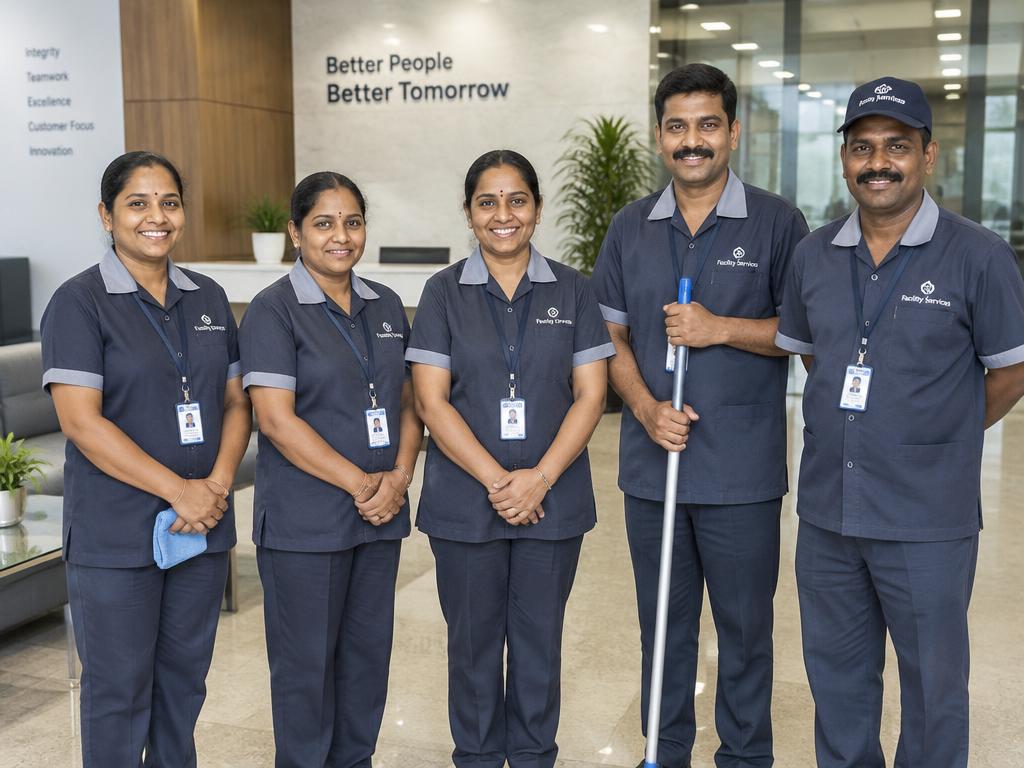
- Uniform & ID cards
- Replacement guarantee
- Supervisor visits
- Consumables option
- Statutory compliance (PF/ESIC)
- Walk-through and handover
Step 1: Police-verified staff
Our crew completes "police-verified staff" using the appropriate equipment — typically tank-cleaning equipment when bundled into the amc — and the right safety gear for this step, before photographing the result and moving on.
This is usually the step that reveals the real condition of the site, which is why the earlier site survey matters — it sets expectations for what this step will actually involve.
Step 2: Uniform & ID cards
Our crew completes "uniform & id cards" using the appropriate equipment — typically standard housekeeping kits (mops, vacuum cleaners, dusting tools) for daily staff — and the right safety gear for this step, before photographing the result and moving on.
Getting this step wrong is one of the more common ways a rushed job falls short: societies that hire individual sweepers with no backup lose coverage the moment that person is on leave, with nobody accountable for the gap.
Step 3: Replacement guarantee
Our crew completes "replacement guarantee" using the appropriate equipment — typically pressure washers for facade, podium and parking areas — and the right safety gear for this step, before photographing the result and moving on.
Getting this step wrong is one of the more common ways a rushed job falls short: societies that hire individual sweepers with no backup lose coverage the moment that person is on leave, with nobody accountable for the gap.
Step 4: Supervisor visits
Our crew completes "supervisor visits" using the appropriate equipment — typically floor scrubbing machines for lobbies and parking — and the right safety gear for this step, before photographing the result and moving on.
Getting this step wrong is one of the more common ways a rushed job falls short: societies that hire individual sweepers with no backup lose coverage the moment that person is on leave, with nobody accountable for the gap.
Step 5: Consumables option
Our crew completes "consumables option" using the appropriate equipment — typically uniforms, id cards and attendance systems for manpower contracts — and the right safety gear for this step, before photographing the result and moving on.
Getting this step wrong is one of the more common ways a rushed job falls short: societies that hire individual sweepers with no backup lose coverage the moment that person is on leave, with nobody accountable for the gap.
Step 6: Statutory compliance (PF/ESIC)
Our crew completes "statutory compliance (pf/esic)" using the appropriate equipment — typically tank-cleaning equipment when bundled into the amc — and the right safety gear for this step, before photographing the result and moving on.
Getting this step wrong is one of the more common ways a rushed job falls short: societies that hire individual sweepers with no backup lose coverage the moment that person is on leave, with nobody accountable for the gap.
Crew size and duration
A mid-size society of 2–4 wings and 100–200 flats typically runs with one cleaning staff per wing for daily housekeeping, plus a visiting deep-cleaning crew of 4–8 for quarterly common-area work and a 2–4 person crew for bi-annual tank cleaning — all coordinated under one AMC so the committee deals with a single vendor.
Quality checks during the process
Our supervisor checks for these before marking any step complete:
- Daily housekeeping staff show up on a consistent schedule with no unexplained gaps
- Common areas look clean without the committee having to chase anyone
- A monthly report lands in time for every committee meeting
- Logged resident complaints trend down over a few months
- Tank cleaning and other scheduled services happen on date, not after a reminder chase
Handover and reporting
The supervisor walks through the completed work with you, shares before/after photos and a written report, and agrees the next service date before the crew leaves.
What goes wrong when steps are skipped
Societies that hire individual sweepers with no backup lose coverage the moment that person is on leave, with nobody accountable for the gap. Juggling separate vendors for housekeeping, tank cleaning, facade and pest control multiplies admin work for the committee and makes it hard to track who did what, when — exactly the kind of gap that surfaces awkwardly at an AGM or during a member complaint.
For housekeeping manpower, that's not a generic rule — it's where most shortcuts actually happen.
Need housekeeping manpower?
Free site survey and fixed written quote. Rates from ₹16,000–₹24,000 per staff / month.
Available in Mumbai, Navi Mumbai, Thane, Panvel.
Frequently asked questions
Written and maintained by the Commercial Cleaning Mumbai team, based on hands-on housekeeping manpower jobs across Mumbai, Navi Mumbai, Thane and Panvel. We review this page whenever our process, pricing or guidance changes, and the "updated" date above always reflects the last review.