Table of contents
- 1.The full process at a glance
- 2.Step 1: Site inspection & pest mapping
- 3.Step 2: Gel and spray cockroach treatment
- 4.Step 3: Rodent bait stations
- 5.Step 4: Anti-termite treatment
- 6.Step 5: Mosquito fogging for common areas
- 7.Step 6: Service log for audits
- 8.Crew size and duration
- 9.Quality checks during the process
- 10.Handover and reporting
- 11.What goes wrong when steps are skipped
- 12.Get a free quote
- 13.Frequently asked questions
Quick answer
Professional commercial pest control runs through a survey, then 1) site inspection & pest mapping, 2) gel and spray cockroach treatment, 3) rodent bait stations, 4) anti-termite treatment, 5) mosquito fogging for common areas, 6) service log for audits, and ends with a supervisor walk-through and a completion report. Each step is done in order and photographed before the crew moves to the next one.
Key takeaways
- Every step runs in a fixed order, not an ad-hoc sequence
- Photos at each stage are what turn a promise into proof
- A supervisor walk-through happens before handover, not after payment
- The report is kept for your records, audits or AGM
- Typical crew and duration: Facade and duct jobs typically run with a crew of 3–6 trained technicians, including a dedicated safety supervisor for any height work, over one to several days depending on building height or duct length.
- Skipping or reordering steps is how jobs go wrong — see below
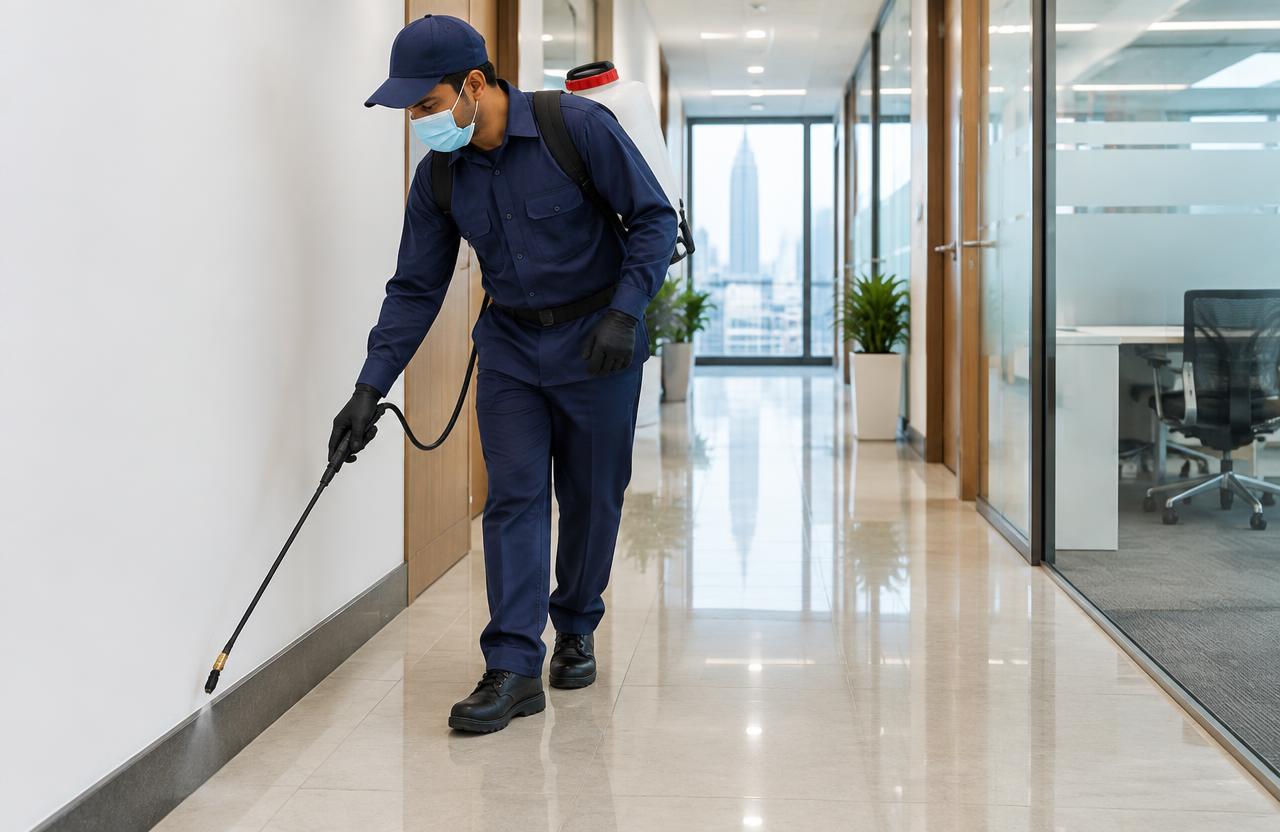
The full process at a glance
Here's the order a proper commercial pest control job follows, from first visit to handover:
- Site survey and planning
- Site inspection & pest mapping
- Gel and spray cockroach treatment
- Rodent bait stations
- Anti-termite treatment
- Mosquito fogging for common areas
- Service log for audits
- Walk-through and handover
Step 1: Site inspection & pest mapping
Our crew completes "site inspection & pest mapping" using the appropriate equipment — typically diamond grinding and polishing pads for marble/granite floors — and the right safety gear for this step, before photographing the result and moving on.
This is usually the step that reveals the real condition of the site, which is why the earlier site survey matters — it sets expectations for what this step will actually involve.
Step 2: Gel and spray cockroach treatment
Our crew completes "gel and spray cockroach treatment" using the appropriate equipment — typically hot-water extraction and ulv fogging machines for sanitization — and the right safety gear for this step, before photographing the result and moving on.
Getting this step wrong is one of the more common ways a rushed job falls short: facade cleaning attempted without rope-access training risks a fall or a dropped-tool injury to someone below.
Step 3: Rodent bait stations
Our crew completes "rodent bait stations" using the appropriate equipment — typically rotary brushes/robots and vacuum extraction for duct interiors — and the right safety gear for this step, before photographing the result and moving on.
Getting this step wrong is one of the more common ways a rushed job falls short: facade cleaning attempted without rope-access training risks a fall or a dropped-tool injury to someone below.
Step 4: Anti-termite treatment
Our crew completes "anti-termite treatment" using the appropriate equipment — typically pure-water fed-pole systems and squeegees for facade glass — and the right safety gear for this step, before photographing the result and moving on.
Getting this step wrong is one of the more common ways a rushed job falls short: facade cleaning attempted without rope-access training risks a fall or a dropped-tool injury to someone below.
Step 5: Mosquito fogging for common areas
Our crew completes "mosquito fogging for common areas" using the appropriate equipment — typically rope-access kits, harnesses and anchor points, or a bmu/boom lift for height work — and the right safety gear for this step, before photographing the result and moving on.
Getting this step wrong is one of the more common ways a rushed job falls short: facade cleaning attempted without rope-access training risks a fall or a dropped-tool injury to someone below.
Step 6: Service log for audits
Our crew completes "service log for audits" using the appropriate equipment — typically surface-appropriate chemicals (avoiding acid on stone, avoiding ammonia on certain acp coatings) — and the right safety gear for this step, before photographing the result and moving on.
Getting this step wrong is one of the more common ways a rushed job falls short: facade cleaning attempted without rope-access training risks a fall or a dropped-tool injury to someone below.
Crew size and duration
Facade and duct jobs typically run with a crew of 3–6 trained technicians, including a dedicated safety supervisor for any height work, over one to several days depending on building height or duct length. Floor polishing and post-construction cleaning crews scale from 4 to 15+ people depending on site size and handover deadline.
Quality checks during the process
Our supervisor checks for these before marking any step complete:
- No streaks, residue or missed patches on facade glass when viewed in daylight
- Duct interior is visibly grease-free on camera/torch inspection, not just the hood
- Floors have an even sheen with no dull patches or swirl marks
- Post-construction areas have zero cement film or paint specks on glass and fixtures
- A signed completion report with photos is provided before final payment
Handover and reporting
The supervisor walks through the completed work with you, shares before/after photos and a written report, and agrees the next service date before the crew leaves.
What goes wrong when steps are skipped
Facade cleaning attempted without rope-access training risks a fall or a dropped-tool injury to someone below. Kitchen duct cleaning that only wipes the visible hood and skips the duct interior leaves grease exactly where fire inspectors look. Post-construction cleaning that skips a final dust pass leaves cement film on glass and fixtures that hardens and becomes far harder to remove later.
For commercial pest control, that's not a generic rule — it's where most shortcuts actually happen.
Need commercial pest control?
Free site survey and fixed written quote. Rates from ₹1–₹3 per sq. ft. (min. visit charge applies).
Available in Mumbai, Navi Mumbai, Thane, Panvel.
Frequently asked questions
Written and maintained by the Commercial Cleaning Mumbai team, based on hands-on commercial pest control jobs across Mumbai, Navi Mumbai, Thane and Panvel. We review this page whenever our process, pricing or guidance changes, and the "updated" date above always reflects the last review.